Infos

Plenary Speaker
Francisco Medina Mena – University of Seville, Spain
Bridging Maxwell and Circuit Theory: Physical Insight in Periodic Surface Design
BIOGRAPHY
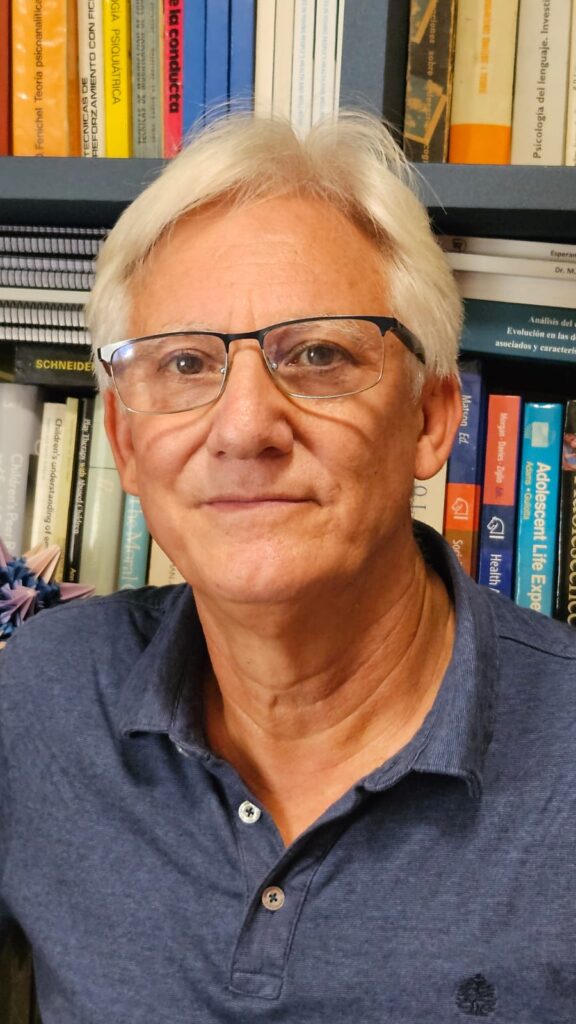
Francisco Medina Mena was born in Puerto Real (Cádiz, Spain) in November 1960. He received the degree in Physics, specializing in Electronics, from the University of Seville in 1982, graduating with the Extraordinary Degree Award. In 1987, he obtained his Ph.D. in Physics from the same university under the supervision of Prof. Manuel Horno, with a dissertation devoted to the modelling of planar transmission structures. His doctoral thesis received the City of Seville Award for the best dissertation in the field of Engineering and Architecture, as well as the Rogelio Segovia Torres Award granted by the Spanish Section of the IEEE.
Following a postdoctoral stay at the Laboratoire de Microondes of ENSEEIHT (N7), Institut National Polytechnique de Toulouse, France, he returned to the University of Seville, where he became Associate Professor in 1990 in the Department of Electronics and Electromagnetism. Since October 1998, following the passing of its founder, Prof. M. Horno, Francisco Medina has led the Microwave Group of the University of Seville (GMUS), which brings together researchers from the aforementioned department and from the three Departments of Applied Physics at the same institution. He became Full Professor in 2009. At the beginning of this period, he also carried out a research stay at Queen Mary University of London.
His research activity has focused mainly on the solution of electromagnetic problems involving the transmission, radiation and scattering of electromagnetic waves in the microwave frequency range. He has also worked on the design of passive microwave devices and antennas and, over the last two decades, on the modelling of periodic electromagnetic structures and metamaterials.
His scientific output includes approximately a dozen book chapters, more than 180 JCR-indexed journal papers and more than 350 contributions to national and international conferences. He has also co-edited a book on balanced microwave filters together with F. Martín, J. Hong and L. Zhu. His work has received significant recognition, with more than 6,700 citations and an h-index of 38 in Web of Science, and more than 11,400 citations and an h-index of 49 in Google Scholar. He has been a Fellow of the MIT Electromagnetics Academy since 2005 and an IEEE Fellow since 2010, the latter distinction being awarded for his contributions to the modelling of planar structures, anisotropic media and metamaterials. Several of his journal and conference papers have received Best Paper Awards and related distinctions.
Francisco Medina has also been actively involved in the organization of scientific conferences in different roles. He served as Co-Chair of IEEE NEMO 2017 in Seville and was a member of the Technical Programme Committee of the European Microwave Conference (EuMC) for many years. He has also acted as a reviewer for numerous conferences in the field of applied electromagnetics.
He has served as an editor of the International Journal of Microwave and Wireless Technologies, where he has also been, and continues to serve as, an Associate Editor. He has reviewed hundreds of manuscripts for more than 70 journals in the fields of electrical engineering and applied physics and has prepared numerous evaluation reports for research projects and academic appointments in Spain and in several countries across Europe, Africa and the Americas.
ABSTRACT
The interaction of electromagnetic waves with periodic structures has fascinated scientists since early observations of optical diffraction gratings. In modern microwave, millimeter-wave, and optical engineering, metallo-dielectric periodic arrays—such as Frequency-Selective Surfaces (FSSs), metasurfaces, and absorbers—are essential for controlling wave filtering, absorption, and polarization. While modern Computational Electromagnetics (CEM) relies heavily on full-wave numerical solvers, these tools often function as “black boxes” that obscure underlying physical mechanisms.
This talk provides a unified perspective on the modeling of periodic electromagnetic structures, balancing historical foundations with modern analytical advances. We first review the evolution of Equivalent Circuit Models (ECMs), tracing their origins from early quasi-static approximations and waveguide discontinuity theories to their modern implementations. We then highlight our contributions to rigorous multimode network formulations for 1D strip/slit arrays and 2D planar periodic scatterers embedded in multilayered media. By mapping Floquet modes to equivalent transmission lines and lumped reactances, our approach separates the infinite modal spectrum into a few dynamically tracked low-order harmonics and a frequency-independent reactive remainder. This yields closed-form, minimal-order circuit topologies derived directly from Maxwell’s equations without requiring empirical curve-fitting. Finally, we demonstrate how these equivalent networks provide intuitive physical explanations for complex electromagnetic anomalies, including extraordinary optical transmission (EOT) and phase resonances in compound gratings.